 Hidden oil on the Gullfaks field
1 July 2008
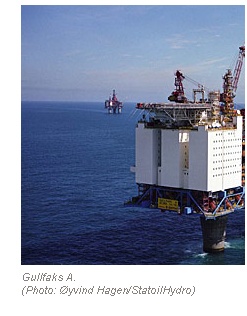 The search for oil is still on at Gullfaks, where the expected recovery factor is now more than 60 percent. 4D seismic surveys have helped boost the production by more than 60 million barrels of extra oil.
"Equalling more than one year's production on the field, this gives you an idea about the great accuracy of 4D seismic surveys," Reidar Helland, the head of petroleum technology (Petec), said in a presentation at the World Petroleum Congress Monday.
The congress held in Madrid these days boasts almost 4000 delegates, great press turnout and the presence of the Spanish king during the opening. Held every three years the Madrid conference is kind of "the Olympics" of international oil and energy events.
Helland is one of several speakers from StatoilHydro at the conference. The company is also represented by chief executive Helge Lund, who will give the introductory speech at the plenary session on Advancing Sustainability in the Oil and Gas Industry.
During his presentation at the session on improved oil and gas recovery from mature fields Helland referred to the good results achieved by means of 4D seismic surveys at Gullfaks. This technology makes it possible to confirm the existence of oil deposits that have not been identified through established reservoir simulation models. Repeated collection of 4D seismic data will allow changes in the reservoir over time to be recorded.
High success rate
Seventeen wells have been drilled at Gullfaks based on 4D seismic data since StatoilHydro started using this technology in the mid-1990s. These wells would hardly have been drilled without the use of this technology.
"Oil has been struck in all of the wells. In other words, an excellent accuracy. This experience clearly shows the importance of employing new technology," Helland emphasises.
The goal is to further increase the rate of recovery at Gullfaks, the ambition being a recovery factor of 70 percent based on a productive life for the field until 2030. Helland admits that this is a challenging ambition.
Several factors
Gullfaks' good production performance is due to several factors, Helland maintains, referring to pressure maintenance, e.g., through the use of super injectors, water alternating gas injection, increased topside processing capacity, sophisticated well paths and the use of 4D seismic surveys to identify the remaining oil in the reservoir.
Gullfaks' good production performance is due to several factors, Helland maintains, referring to pressure maintenance, e.g., through the use of super injectors, water alternating gas injection, increased topside processing capacity, sophisticated well paths and the use of 4D seismic surveys to identify the remaining oil in the reservoir.
The first repeated 4D seismic technology was introduced in 1996. Gullfaks has not been the only field using 4D seismics on the Norwegian continental shelf. Heidrun, for example, has employed the technology successfully, but Gullfaks stands out because of its great scope, great data volume and the number of data sets that have been entered.
"Building reservoir simulation models is highly resource-demanding. Using 4D seismic technology we get a more precise model which provides a better basis for the search for oil," Reidar Helland maintains.
StatoilHydro
|