|
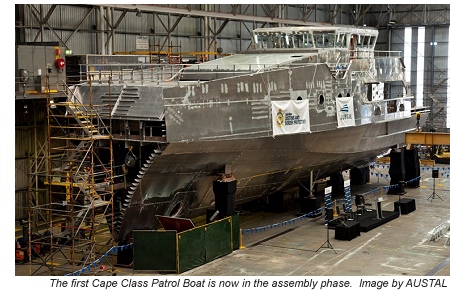
“Like our US Navy projects, this program shows that Austal can do more than design and manufacture world-class ships. We are also taking the prime contracting role and using in-house expertise to develop and integrate sophisticated electronic systems for command, control and communication. We are also building on our existing capabilities to establish and operate a comprehensive and effective in-service support system for the fleet,” Mr Bellamy said. “This total solution capability represents the future of our Australian business, as we continue to expand and enhance the strategic industry capability necessary to meet the current and future defence needs of Australia and other nations,” he said. Mr Bellamy said the fact that Austal had been awarded the contract after a rigorous, open international tender process by a highly experienced and meticulous customer reflected the company’s ability to successfully compete in the global market. “This is the Australian Government getting the best possible value regardless of supplier nationality, and that’s the basis upon which we secured this work. “The fact that we are on track to deliver that capability, as promised, is a credit to all involved. It reflects the skills and hard work of our staff, many of whom bring invaluable experience from previous government contracts carried out both here in Australia and at our US shipyard,” he said. Construction of the first Cape Class Patrol Boat will continue in accordance with schedule, with launch due in December this year prior to sea trials and delivery to Customs and Border Protection in March 2013. Austal’s eight year support contract for the fleet encompasses a full range of intermediate and depot level maintenance activities. The Cape Class Patrol Boats will play a significant role in protecting Australia’s borders from multiple maritime threats, and have been designed to have greater range, endurance and flexibility, as well as enhanced capability to operate in more severe sea conditions than the current Customs and Border Protection fleet. The aluminium monohulls can operate at 25 knots and have a range in excess of 4000 nautical miles. Each can undertake simultaneous operations with two embarked 7.3 metre rigid hulled response vessels. Project Background Austal was awarded the contract for the design, construction and through-life support of the Cape Class patrol boats for the Australian Customs and Border Protection Service in August 2011. The eight 58 metre aluminium monohulls are due to be delivered between March 2013 and August 2015. The support contract extends for a minimum period of eight years and encompasses a full range of intermediate and depot level maintenance activities. Further options can be exercised by the Australian Customs and Border Protection Service for In-Service Support for the life of the Cape Class Patrol Boat Fleet. The Cape Class Patrol Boats will have greater range, endurance and flexibility in responding to maritime security threats than the current fleet. These vessels will also have enhanced capability to operate in higher sea states and survive in more severe conditions. The Cape Class Patrol Boats will be able to: • Undertake 28 day patrols; • Sail 4,000 nautical miles before having to refuel; • Combat the full range of maritime security threats; • Carry a larger crew to more effectively and safely manage boarding operations; • Identify, track and intercept an extended range of threats in the maritime domain and gather intelligence and store evidence for matters that may proceed to the courts; and • Launch two Tender Response Vessels simultaneously. Customs and Border Protection patrol boats may be deployed according to aerial surveillance, community reports and/or radar sightings. They may be used to: • Counter people, drug and weapons smuggling; • Apprehend foreign fishing vessels; • Gather information and intelligence; • Monitor environmental pollution; and • Assist management of offshore nature reserves and marine parks. Austal press release |

 Although Austal’s design and manufacturing approach is thoroughly modern, the ceremony retained long held shipbuilding traditions. This included placing specially minted coins under a keel block as a symbol of good fortune and to bless the ship. These coins will be removed just prior to the patrol boat’s launch which is scheduled for later this year.