|
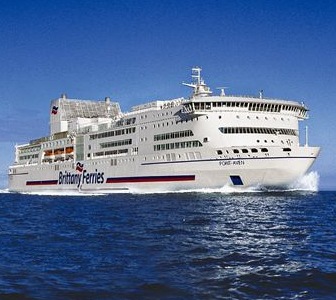
Monday 04 April 2016 Brittany Ferries completes investment. • Pont-Aven and Armorique are last ferries in Brittany Ferries fleet to be fitted with 'scrubbers' : funnel emission-reduction systems • Last year Brittany Ferries reported a 7.5% increase in passenger traffic to 2,605,972 people across all routes to and from France, Spain and Ireland. Freight traffic increased by 22% • This year Brittany Ferries celebrates 30 years of its Portsmouth to Ouistreham-Caen route, which today carries 38% of all passengers Brittany Ferries is in the final phase of a project that will significantly improve the environmental performance of its fleet. In total, £60m has been invested over 18 months to install so-called 'scrubbers' to six cruise-ferries. These vast and technically-complex exhaust systems strip sulphur from funnel emissions and significantly cut particulate output. Brittany Ferries flagship, which carries up to 2,400 passengers from Portsmouth to Spain and France, as well as from France to Ireland, was the last to return to service complete with her new scrubber installation. Work to Pont-Aven had been carried out at the famous Gdansk shipyard, in Poland, and her scrubbers will be fine-tuned by engineers over the next few weeks. Armorique, a cruise-ferry which carries passengers on the route of the first Brittany voyage between Roscoff and Plymouth on 1 January 1973, has also recently returned to service. Her scrubbers were engineered in the Astander shipyard, Spain and the design allows passengers to see the complexity of the internal works for themselves. Collectively, the investment in these two ships was around £30m. "As a company we are proud of our reputation as guardians of the land and stewards of the sea," said Mike Bevens, Brittany Ferries group commercial director. "Today we are still largely owned by the collective of French farmers who launched the company more than 40 years ago, with the aim of linking territories and improving trade. These aims have always been framed by a will to respect the environments in which we operate and this significant investment is testament to our on-going commitment." This year Brittany Ferries most popular route celebrates 30 years of service. Portsmouth to Caen carries nearly a million passengers each year, around 38% of total Brittany Ferries passenger traffic and around 55% of all freight. The route is now largely sulphur-emissions free thanks to scrubber fitment for Mont St Michel and Normandie in 2015, cruise ferries which serve three daily rotations and year-round operations. Barfleur, which sails the Poole to Cherbourg route and Cap Finistère which carries passengers across the wildlife-rich Bay of Biscay en route to Spain also benefit from the emission-reduction technology. Cutting air quality emissions is just one way in which Brittany Ferries works to reduce the impact of its operations - and to support organisations that promote conservation work. Other measures include the following Cutting CO2 emissions while sailing Brittany Ferries operations are planned to minimise fuel consumption, by reducing speed on overnight crossings. The effects of tides and the wind are also harnessed to optimise fuel efficiency. Taking freight traffic off the roads We are part of the motorways of the seas programme. Last year we carried nearly 200,000 freight vehicles. According to an EU calculation, the external costs of travel by sea are nearly four times lower than for freight transport by road. Our water discharge policy All vessels are fitted with water treatment units. Only uncontaminated water is discharged to sea, and at a minimum of 12 nautical miles from the coast. Polluted water is stored on board, then taken to shore, to be disposed of by certified waste disposal contractors. Using anti-fouling paints Brittany Ferries uses the latest silicon-based anti-fouling paints to coat the submerged parts of hulls. These are low in toxicity and also enhance flow through the water, aiding fuel efficiency and thereby reducing CO2. Low emission vehicles On land we take our environmental responsibilities seriously too. Examples include our participation in the plugged-in fleets initiative in the UK, and through plans to include electric charging points for cars, for example at Portsmouth Port this year. Conservation work Our ships are taking part in the longest running marine biological survey in the world, towing continuous plankton recorders (CPR) for SAHFOS. We are also proud to work with whale and dolphin charity ORCA. Wildlife officers live on our ships throughout the summer to monitor and report on whale and dolphin sightings through the Bay of Biscay. This helps government fulfil its obligations under the Habitats Directive, but also supports conservation work to protect these beautiful sea creatures. About Brittany Ferries Brittany Ferries is a passenger car and freight service operating from eleven ports, linking four countries: UK - France, UK - Spain and Ireland - France. The company was set up by a collective of French farmers as a freight-only operator, running from Roscoff in Brittany to Plymouth with the first crossing taking place on 1 January 1973, the date the United Kingdom joined the EEC (forerunner to the EU). The aim then was to bring French agricultural products to a wider British market. However, the service quickly developed into an operation carrying hundreds of thousands of British tourists, eager to experience the delights of Brittany and Normandy. Today Brittany Ferries is the market leader on the Western Channel for passengers and for freight. It is also a leading supplier of ferry-inclusive motoring holidays to France and Spain. Further information can be found by visiting: www.brittanyferries.com. Brittany Ferries press release 
|