 New RSCS Notation for MV Maersk Elba
Hamburg, 16 December 2013
|
|
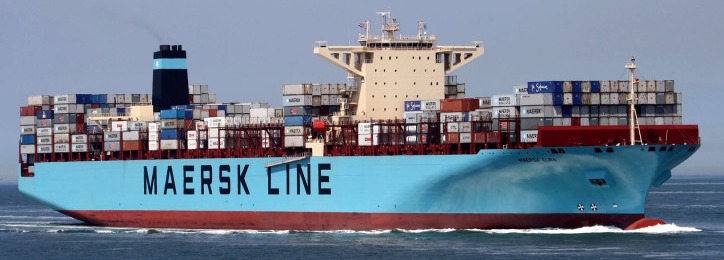
Managed by Rickmers Shipmanagement Singapore, Maersk Elba is the first of a series of eight 13,000TEU containerships which will implement the newly introduced class notation. Supported by DNV GL, Rickmers is also currently preparing to upgrade further vessel types with the RSCS notation.
|
|
“The RSCS notation is the result of intensive cooperation with our industry partners, Rickmers Group being one of the most notable,” said Dirk Lange, DNV GL, “the notation allows operators to adapt their stowage patterns based on verified data to maximise their loading capacity for their individual routes, while at the same time preserving the same levels of safety. As well as resulting in reduced fuel costs per TEU and constituting a competitive edge for carriers operating vessels being assigned with this notation, vessels equipped with the new notation will be more attractive in the market.”
With RSCS, ship operators have greater flexibility in stowing heavier containers in higher positions on deck. This is because the centre of gravity of shielded stacks can be increased by up to 21%. Moreover, a significant increase of in-hold stack weight for 20-foot stowage – up to 25% - can be achieved. In addition to these benefits, nominal capacity can be increased and an additional tier can be added where the line of sight is not affected.
The implementation of RSCS is easy and offers high impact with low implementation effort. Owners and managers merely adopt an addendum to the Container Securing Arrangement plan and install or update a certified lashing computer on board, with integrated software elements from DNV GL. No further retro-fitting measures of equipment are needed. According to Dr.-Ing. Georg Eljardt, head of Rickmers Maritime Technology, the Rickmers Group is proud of being an active contributor during the development of this innovative class notation and in addition being one of the first ship owners worldwide to be able to offer this innovative competitive edge to its customers, enhancing the flexibility and efficiency of its container vessels.
On 12 September 2013, DNV and GL merged to become DNV GL
The new company DNV GL started operating as one company with effect from 12 September 2013. DNV GL is now the world’s largest ship and offshore classification society, a leading technical advisor to the oil & gas industry and a leading expert for the energy value chain including renewables. DNV GL has also become one of the top three certification bodies in the world.
DNV GL press release