|
 The Pulse of the Sea: Electric LNG Ships Don’t Steam, They Charge
April 26, 2013
The natural gas boom has been driving growth and adding jobs in gas-rich countries like the U.S. and Australia, but the benefits will soon reach many distant shores. Shipyards in Korea and elsewhere are busy building new liquefied natural gas (LNG) carriers to move the fuel around. Many of the new supertankers will use electric propulsion systems designed and manufactured by workers at the marine propulsion powerhouse GE Power Conversion.
The British Emerald was the world’s largest LNG carrier when it launched in 2007. It was also the first vessel built by Hyundai Heavy Industries that used GE’s electrical propulsion technology. The ship generates electricity by burning waste gasses that evaporate from the holding tanks. The power generators can also switch to diesel.
Two of the world’s largest shipyards, Hyundai Heavy Industries and Daewoo Shipbuilding & Marine Engineering, are working on new massive carriers powered by heavy-duty GE motors, generators, transformers and other technology. GE Power Conversion has signed contracts to supply propulsion systems for an armada of 31 LNG vessels over the last year.
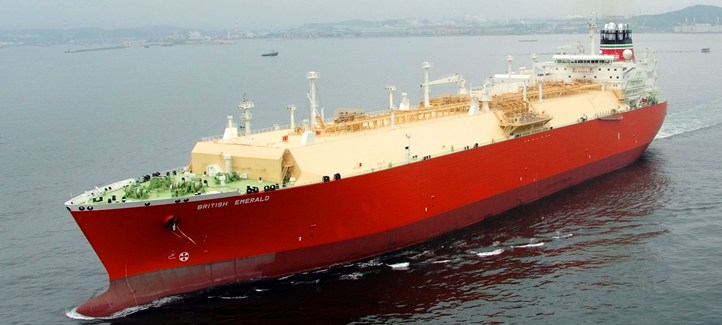
The British Emerald was the world’s largest LNG carrier when it launched in 2007. It was also the first vessel built by Hyundai Heavy Industries that used GE’s electrical propulsion technology. The ship generates electricity by burning waste gasses that evaporate from the holding tanks. The power generators can also switch to diesel.
Electric ship propulsion has been around for a century. Although it has been long considered an inefficient novelty, engineers perfected it in the last few decades. “We started the marine electric propulsion story,” says Jean-Philippe Chaignot, a marine propulsion leader at GE Power Conversion.
Electric motors designed by GE engineers now power some of the biggest and most sophisticated vessels, from aircraft carriers and destroyers to tankers, cruise ships and Queen Mary 2, the largest ocean liner ever built and the fastest one in service.
The ships use either diesel or gas to produce electricity. The new electric propulsion design leaves more open space for cargo because the generator and the propeller do not need to be connected by a rigid shaft anymore. Instead, the new design allows ship operators transfer power from the electricity generator to the propeller motor by a flexible cable. The electric system also cuts weight, noise, vibrations, and improves efficiency.
The GE propulsion systems inside the new tankers will generate enough electricity to power a small town.
There are already 30 LNG tankers powered by this GE technology, 70 cruise ships, and dozens of other merchant and military vessels. Just this month the company announced that it signed a $14 million contract to fit the USS Mount Whitney command ship with new electric gear.
Popular Mechanics wrote in 1920 that “as to the operation of electrically driven vessels, the bugaboo as regards electricity is fast leaving the minds of the ship owners, who are coming to realize that, instead of introducing difficulties in the matter of operating force, the adoption of the electric drive will eliminate them and make ships considerably less dependent upon the skill and resourcefulness of crews.” Alas, that claim has come to pass.
General Electric Company - Press Release
|