
Hapag-Lloyd increases freight rate, volume and revenue in 2012 financial year
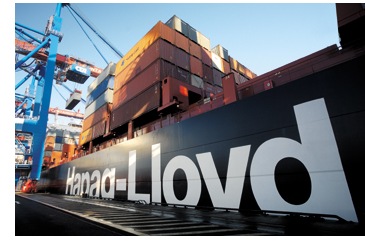 Freight rate up 3.2% on last year / Transport volume increases by 1.1% / Revenue rises by 12.1% to EUR 6.84 billion / Absence of peak season and persistently high energy costs weigh on business / Positive operating result of EUR 26 million / EBITDA of EUR 335 million
19 Mar 2013
Hapag-Lloyd was able to increase the freight rate, transport volume and revenue in the past financial year. Despite the challenging economic environment, Hapag-Lloyd achieved an EBITDA of EUR 335 million and an EBIT of EUR 26 million in 2012, allowing it to once again do well compared with its industry peers. The average freight rate in 2012 saw a year-on-year increase of 3.2% to USD 1,581/TEU. Transport volume rose by 1.1% to approximately 5.3 million TEU. Revenue reached EUR 6.84 billion and was 12.1% higher than in the previous year also due to exchange rate movements. The Group net result came to EUR -128 million.
The marked downturn in the global economy also resulted in unexpectedly low cargo volumes and an absence of the peak season in the second half of the year. Imports in Southern European countries hit by the debt crisis were particularly affected, together with exports from growth drivers such as China, India and Brazil. Peak season surcharges, which represent an important earnings contribution in the liner shipping sector, could not be achieved in key trades in 2012. The rate increases successfully implemented in the first half of the year – amounting to more than 12% between January and July at Hapag-Lloyd – deteriorated again in the second half of the year as a result of weaker demand.
“Despite a difficult economic environment, we were able to generate a positive operating result, as we did in 2011. Although this meant that we performed well compared to the rest of the industry, earnings fell short of our expectations and are not satisfactory,” said Michael Behrendt, Chief Executive Officer of Hapag-Lloyd. “Our goal for the current financial year is to achieve a solid improvement in earnings with the help of our already announced rate increases and further cost reductions in order to be able to distribute a dividend again.”
Hapag-Lloyd was able to limit the negative impact of the difficult market environment thanks to successful yield management, strict cost discipline and maintaining a competitive fleet comprising the latest newbuildings with a capacity of 13,200 TEU. Hapag-Lloyd postponed the delivery of the last three already fully-financed newbuildings from the second half of 2013 to March and April 2014 as a result of the latest transport volume forecasts. Furthermore, Hapag-Lloyd is able to adapt flexibly its total fleet to meet changes in demand on the market using an efficient mix of owned and chartered tonnage. If required, Hapag-Lloyd can return chartered ships to the owners.
The successful launch of the new G6 Alliance was another milestone in 2012, founded by Hapag-Lloyd together with five Asian partner shipping companies for the Far East trade. “The G6 Alliance enables us to offer our customers a much better product without additional costs,” said Michael Behrendt. After its success the G6 Alliance will be extended to the trade between Asia and the North American East Coast from May onwards. In doing so, Hapag-Lloyd will be able to offer its customers 40% more port connections and 70% more weekly connections between the two continents in one fell swoop and without having to provide additional tonnage. Further proof of the high level of customer satisfaction enjoyed by Hapag-Lloyd came in the shape of the award for the best carrier of the year in 2012 from five international forwarding companies, including several industry leaders. “As a quality carrier that is well represented evenly across all main trades, and as a member of strong partnerships such as the G6 Alliance, Hapag-Lloyd is ideally positioned to benefit from future growth in global container transport,” emphasised Michael Behrendt.
According to industry forecasts from IHS Global Insight, transport volumes in worldwide container shipping are set to increase by 3% in 2013 and by as much as 6% annually in the following years. Global transport volumes are forecast to rise by a total of 27% or 33 million TEU to a global annual level of 158 million TEU by 2017. At the same time, very few shipping companies are ordering new ships and an increasing number of vessels are being taken out of service. “Supply and demand levels are starting to converge again. Given that 90% of all goods traded around the world are transported by sea, container shipping continues to be a definite growth industry,” states Michael Behrendt.
Even after EUR 791 million of investment last year in own ships and containers to boost maritime assets, Hapag-Lloyd had a very solid balance sheet with an equity ratio of 45.5%. With liquidity reserves of over EUR 630 million (including unused credit lines as at 31 December), the Company is securely positioned for the future.
Hapag-Lloyd press release