|
Standardizing Calculation Methods to advance decarvonisation across the shipping industry May 26, 2025 Eastern Car Liner, Ltd. Kawasaki Kisen Kaisha, Ltd. Mitsui O.S.K. Lines, Ltd. Nippon Yusen Kabushiki Kaisha Wallenius Wilhelmsen ASA Nippon Kaiji Kyokai (ClassNK)
In recent years, interest in carbon emissions (carbon footprint) throughout the lifecycle of products and services has been increasing. But this has not been without challenge, in particular, the accurate measurement of GHG emissions in maritime transport and differences arising in individual calculation methods. The six members participated in the GRC hosted by SFC and developed a standard model for calculating GHG emissions through open discussions ensuring fairness and transparency with stakeholders involved in Ro-Ro ships (shipping companies, shippers) and third-party verification organizations. The standard model complies with the ISO 14083***** and GLEC (Global Logistics Emissions Council) framework and was announced at the SFC annual event “Smart Freight Week” held in Amsterdam in March. Derived from the standard model presented by GRC, it now features as a set of guidelines on the SFC website. In the future, the SFC plans to collect actual data on environmental performance on a ship-by-ship basis and publish average high-precision emission intensity data for the industry. Consequently, the initiative provides a cross-industry first step towards decarbonizing global logistics and contributes to promoting measures against global warming. The guidelines: Deep-sea Ro-Ro Ship Greenhouse Gas Emission Intensity Calculation Methods 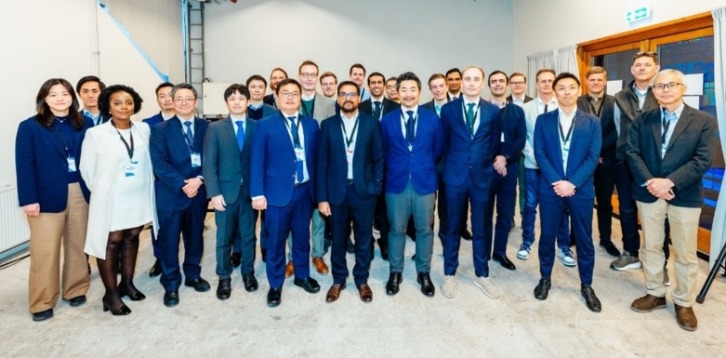
Image by K-Line.
** Ro-Ro Ships Cargo vessels that allow automobiles, trucks, trailers, construction machinery, and agricultural machinery to drive directly onto the ship. This includes car carriers and ferries. *** Smart Freight Centre (SFC) Based in the Netherlands, SFC is a non-profit organization that operates globally to address climate change in the freight transport sector. It has a track record of developing guidelines for calculating GHG emissions from Ro-Ro ships within Europe. **** Scope 3 Indirect GHG-emissions associated with an entire corporate supply chain, including emissions that occur across the supply chain and outside the organization's direct control, such as raw-material sourcing, product transport, product use, and disposal. ***** ISO 14083 An international standard for the calculation and reporting of GHG emissions, focusing specifically on emissions from freight and passenger transport. ISO 14083:2023 - Greenhouse gases — Quantification and reporting of greenhouse gas emissions arising from transport chain operations. Kawasaki Kisen Kaisha, Ltd. press release 
|
