|
July 1, 2025
The vessel received 500 tons of bio-LNG from Shell at the Belgium port of Zeebrugge on June 16, 2025. The bio-LNG fuel (liquefied bio methane, LBM), derived from renewable organic waste and residue, is ISCC-EU*1 certified to have a carbon intensity of less than zero on a lifecycle basis*2, from fuel production to consumption. Bio-LNG is a drop-in solution that is fully compatible with existing LNG infrastructure, making it an effective means of decarbonization for the shipping industry. 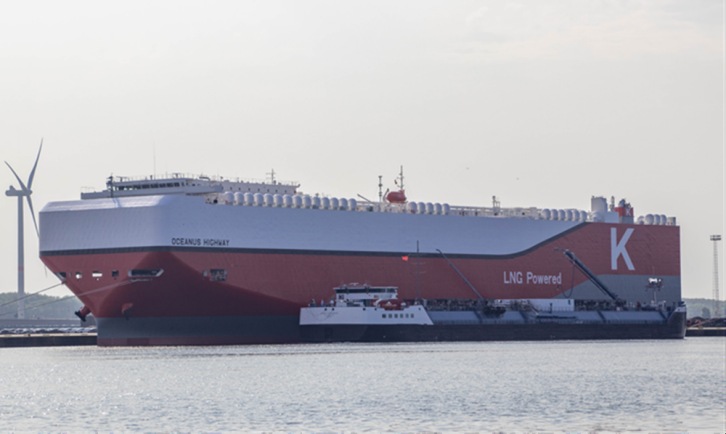
"OCEANUS HIGHWAY" using Bio LNG. Image by K-Line.
Hiroto Arai, the General Manager of the "K" LINE Environmental/Technical Strategy Group said, "Our goal is to achieve net-zero GHG emissions by 2050, and reducing greenhouse gas emissions in maritime transport is one of our top priorities. Our beginning to use bio-LNG fuel is a significant step towards our net-zero GHG emissions goal. Additionally, we feel that our partnership with Shell, a leading global energy company, puts us in a position where we will be able to substantially impact the shipping industry's transition to renewable fuels. We will continue to work diligently on the introduction of renewable fuels to achieve net-zero GHG emissions by 2050." In "K" LINE Environmental Vision 2050: Blue Seas for the Future,*3 we have set a 2030 interim target of improving CO2 emission efficiency by 50% from 2008, surpassing the IMO target of a 40% improvement. Furthermore, we have set our new target for 2050, net-zero GHG emissions. As an action plan, we will continue to work to introduce new low environmental-impact fuels and take on the challenge of achieving the targets we have set. 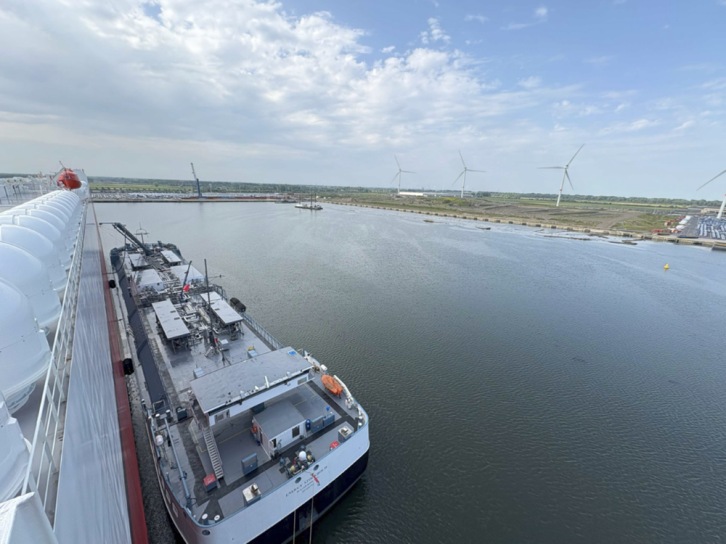
Bio LNG Bunkering Operations. Image by K-Line. *1 International Sustainability and Carbon Certification (ISCC)-EU of sustainable maritime fuel ensures the sustainability of feedstock production, the full end-to-end traceability of sustainable products through the supply chain, and the verified reduction of life cycle emissions in accordance with the EU's RED II. *2 The certified life cycle carbon intensity of less than zero is based on a methodology that includes avoided CO2e emissions from improved agricultural practices in line with RED II. *3 "K" LINE Environmental Vision 205: Blue Seas for the Future As an action plan for GHG reduction, we are introducing zero-emission fuels such as ammonia and hydrogen fuels, as well as carbon-neutral fuels such as bio-LNG and synthetic fuels. https://www.kline.co.jp/en/sustainability/environment/management.html Kawasaki Kisen Kaisha, Ltd. press release 
|
