|
August 23, 2019 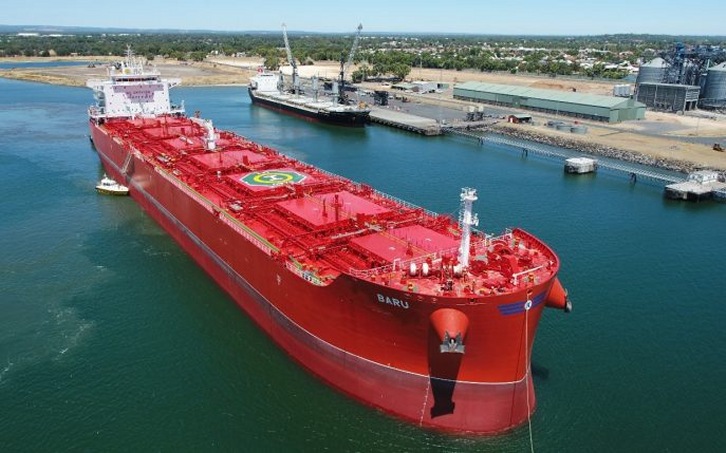
The MV Baru. Image by Klaveness Combination Carriers.
Strong cleaning capabilities with cleaning result available for online inspection on new digital application After discharging of CPP, MV Baru successfully completed cleaning and conversion from tanker mode (as a LR1-tanker) to dry bulk mode (as a Kamsarmax bulk carrier). Having industry leading cleaning capabilities, MV BARU passed all the strict cleaning inspections from the grain cargo surveyors prior to her loading. The cleaning result was for the first time also available for digital inspection by customers on the new Klaveness and DNV-GL Veracity created inspection platform. Video by Klaveness Combination Carriers. Significant contribution to reducing greenhouse gas emissions from shipping
On average, a Kamsarmax vessel would have to ballast about 25 days in order to reach East Coast South America for these grain cargos, however with the inbound CPP cargo the CLEANBU ballasted for less than 2 days between these two cargoes. If a regular LR1 tanker had performed the MV Baru’s voyage, this vessel would have to reposition for her next employment, ballasting to the next loading port which could typically be back to PG, Continent, Mediterranean or US Gulf, all requiring a ballast voyage of around 2-3 weeks. 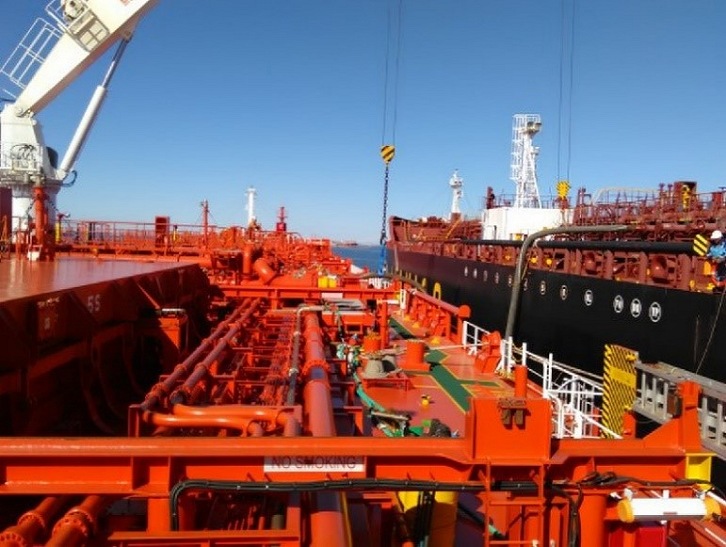
Discharging CPP ship to ship on the inbound CPP voyage. Image by Klaveness Combination Carriers. 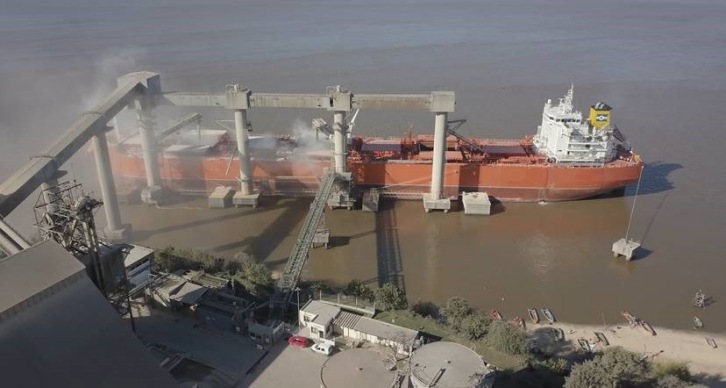
Loading grains in Argentina after completed conversion, cleaning and tank inspections. Image by Klaveness Combination Carriers. Fleet growth in the coming years The CLEANBU fleet now consists of two vessels with the MV Barracuda delivered end July and the third vessel MV Barramundi will join the fleet in September this year. We are looking forward to a safe and successful introduction of these two newcomers to the market and look forward to their contribution in reducing the environmental footprint from deep-sea shipping. Klaveness Combination Carriers, press release 
|
