|
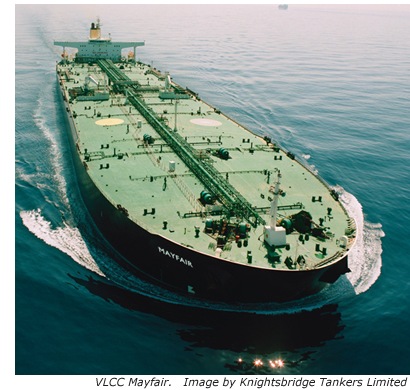
The dry bulk market showed few signs of recovery during the quarter, while the smaller vessel sizes performed better than the Capesize segment in absolute terms for most of the quarter. A Capesize earned on average $6,015 per day according to the Baltic Dry Index, which did not cover operating expenses for many owners. There are some obvious explanations why the Capesize segment has underperformed: Iron ore exports out of Brazil have been low. There is a strong correlation between the Brazilian iron ore export and the Capesize spot market due to the long sailing distances. Fortescue delayed their ramp up of production in Australia from March until May 2013. Colombian coal exports were almost 70 million metric ton lower on an annualized basis, partly due to strikes during first quarter of 2013. Our dependence of development of the Chinese economy has been highlighted for several years. During 2012, iron ore and coal imports combined increased by more than 12 percent, while preliminary data are showing an increase of about six percent for the first three months of 2013. Historically the first quarter is the slowest quarter of the year, which is mainly due to adverse weather in the Southern Hemisphere. Development in international coal and iron ore prices will have a great impact on the dry bulk market going forward. Presently there is a positive arbitrage both for steel producers and utilities compared to domestic Chinese iron ore and coal. With new iron capacity from Australia, Brazil and West Africa coming on stream the next three years and poorer quality of Chinese domestic iron ore, it is expected that imports of iron ore to China will increase. According to shipping analysts, the total dry bulk order book at the end of the first quarter is below 100 million dwt or approximately 14 percent of the existing fleet. At the same time, the fleet older than 20 years is estimated to be approximately 88 million dwt and it is fair to say that the supply side is becoming more balanced. The order book is front heavy and it is expected that supply growth will be well below five percent in 2014 and 2015. There are still available newbuilding slots for 2015 delivery, but quality yards have limited capacity available. An interesting observation is that many yards are reluctant to repeat prices achieved during the first quarter and analysts are estimating that newbuilding prices have bottomed out. In spite of the weak markets, there has been more interest in second hand vessels. Many sales candidates have had several inspectors onboard. Some of the sales concluded have been done at levels equal to or at higher than last done. This is in particular true for vessels less than ten years old built at Japanese or Korean yards. THE FLEET In March 2013, the Company agreed the sale of its final VLCC (the Mayfair) and the vessel was delivered to the buyer on April 9, 2013. The Company recorded an impairment loss of $5.3 million in results from discontinued operations in the first quarter being the expected loss resulting from the sale of this vessel. In March 2013, the Company concluded newbuilding contracts for two 182,000 dwt Capesize bulk carriers with Japan Marine United Corporation ("JMU") in Japan. The design provided by JMU represents the next generation Capesize bulk carriers with the latest technology available in order to secure fuel efficiency. The vessels are expected to be delivered during 2015. The Company has paid $15.4 million in installments and has purchase commitments of $87.0 million with expected payments of $5.1 million and $81.9 million in 2014 and 2015, respectively. The Company's sailing fleet consists of four Capsize vessels. The Battersea is employed in the spot market. The Golden Zhejiang and Golden Future are employed on short term time charters with estimated expiries in the fourth quarter of 2013 and the first quarter of 2014, respectively. The Belgravia is on a long term time charter with estimated expiry in the third quarter of 2014. CORPORATE In January 2013, the Company issued 35,061 common shares and paid $181,610 to members of the Board of Directors, to the General Manager and the Dry Bulk Manager in settlement of the first and second tranches of the RSUs granted in December 2012 and December 2011, respectively, that vested on December 29, 2012. On January 24, 2013, the Board of Directors granted a total of 94,476 RSUs pursuant to the 2010 Equity Plan to members of the Board and the two management companies. These RSUs will vest over 3 years at a rate of 1/3 of the number of RSUs granted on each anniversary of the date of grant. 24,472,061 ordinary shares were outstanding as of March 31, 2013, and the weighted average number of shares outstanding for the quarter was 24,462,711. The Board has decided to declare a cash distribution of $0.175 per share. The record date is May 22, 2013, the ex cash distribution date is May 20, 2013 and the cash distribution will be paid on or around June 5, 2013. OUTLOOK The Board believes the recent Capesize newbuilding contracts concluded with JMU represents an attractive investment for the Company in terms of risk/reward. Although we are in a period with over supply in the dry bulk market, the Board expects the situation to improve at the time of delivery of the newbuildings. Knightsbridge remains well positioned in the market place with its modern bulk fleet and financial flexibility. The Company will continue to search for additional acquisitions in market segments where the risk/reward ratio is attractive. Knightsbridge Tankers Limited press release |

 The Company reports a net loss from continuing operations (i.e. the Capesize vessels) of $0.4 million and a loss per share from continuing operations of $0.02 for the first quarter compared with net income from continuing operations of $1.3 million and earnings per share from continuing operations of $0.05 for the preceding quarter. The decrease in net income is primarily attributable to a decrease in vessel earnings. The average daily time charter equivalent ("TCE") earned by the Company's Capesize vessels in the first quarter was $17,900 compared with $22,700 in the preceding quarter. In May 2013, the Company has an average cash breakeven rate for its Capesize vessels of $8,900 per vessel per day.