 Guanabara Bay LNG terminal completes testing stage
1/4/2009
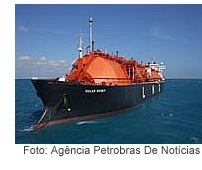 Petrobras announces that the Guanabara Bay liquefied natural gas (LNG) regasification terminal successfully completed its testing stage today (03/31). From March 26 through today (03/31), at 4 PM, regasified LNG was delivered to thermoelectric plants in Southeastern Brazil to be used for electric energy generation.
The natural gas was regasified on board the Golar Spirit vessel, which sailed from the Pecém LNG terminal (in the state of Ceará) to Rio de Janeiro to operate in the Guanabara Bay unit testing procedures.
The LNG that was regasified at the terminal was delivered to the Governador Leonel Brizola (1,036 MW) and Aureliano Chaves (226 MW) thermoelectric plants. The plants generated, respectively, an average of 435 MW and 215 MW during these six days. The Governador Leonel Brizola TEP peaked generation at 550 MW, while the Aureliano Chaves one generated an average of 215 MW throughout the period. The power that was produced at the plants was destined to the National Interconnected System (NIS).
The LNG that was regasified at the terminal was transferred over compressed natural gas (CNG) transference arms to a 15-km long gas pipeline, 10 km of which under water and 5 km onshore, that connects the Guanabara Bay terminal to the Southeastern region gas pipeline network.
LNG transference
The LNG load that was stored on Golar Spirit, the first vessel in the world to be converted to store and regasify LNG on board, was brought by the Excellence vessel. The two ships moored at the Guanabara Bay terminal last March 11.
The LNG was transferred from the Excellence to the Golar Spirit, on March 17, by means of cryogenic arms installed in the terminal and capable of resisting to temperatures below 160oC below zero.
The Guanabara Bay terminal is capable of regasifying 14 million cubic meters of natural gas per day. Inserting LNG in Brazil allows for more flexibility in the Brazilian natural gas supply by providing the country with new sources of supply and, thus, ensuring greater energy safety. The LNG will be used, prioritarily, to fuel thermoelectric plants.
Petrobras press release
|