 New ships for Royal Navy secure UK shipbuilding skills
The agreement with BAE Systems provides work for the company between the completion of the Queen Elizabeth Class Aircraft Carriers and the Type 26 Global Combat Ship, securing the vital skills needed to build the UK’s future warships.
06/11/2013
The Defence Secretary is also announcing today that more than £100 million will be invested in Her Majesty’s Naval Base Portsmouth, which will be home to both HMS Queen Elizabeth and HMS Prince of Wales.
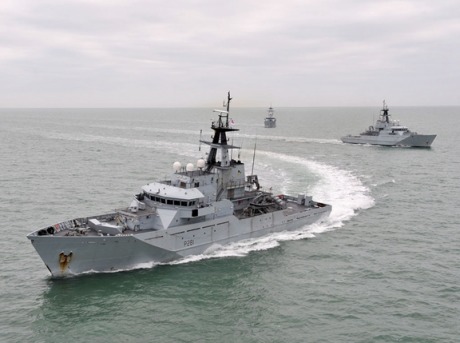
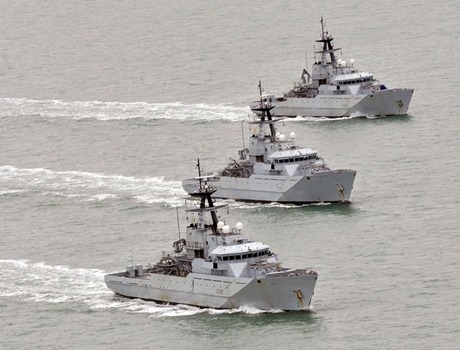
The MoD plans to commission three new ocean-going Offshore Patrol Vessels for the Royal Navy in a deal that will sustain jobs in the UK’s warship building industry. The new ships, which will be built by BAE Systems at their shipyards on the Clyde, will play a key role in counter-terrorism, counter-piracy and anti smuggling operations. Images by the Royal Navy.
|
Under the Terms of Business Agreement signed with BAE Systems in 2009 the MoD would have been liable to pay for any periods when no shipbuilding was taking place at UK yards.
Building Offshore Patrol Vessels means not only are staff at BAE Systems able to continue to work and maintain their skills, but the Royal Navy benefits from three new ships and the taxpayer gets much better value for money.
The cost of building the ships is funded from money that would have been used to pay for idle capacity, finance redundancies and meet the cost of industrial restructuring.
Portsmouth will maintain its proud maritime heritage as the home of much of the Royal Navy’s surface fleet and the centre of BAE Systems ship support and maintenance business.
Defence Secretary Philip Hammond said:
“This deal will provide the Royal Navy with three brand new maritime patrol vessels with a wide range of capabilities which will support our national interests and those of our Overseas Territories.
"This is an investment not only in three ships but in this country’s warship building industry. It prevents workers standing idle and sustains the vital skills needed to build the planned Type 26 frigate in the future.
Work on the new Offshore Patrol Vessels is due to begin next year with the first ship being delivered to the Royal Navy in 2017. The ships are expected to replace the current, smaller River Class vessels, HM Ships Tyne, Severn and Mersey which have been policing the UK’s waters since 2003, but a final decision will be taken in the next Strategic Defence and Security Review.
Admiral Sir George Zambellas, First Sea Lord, said:
"These new patrol vessels will build on the proven performance of the River Class by adding a flight deck to take the Navy’s Merlin helicopters and by adding operational flexibility through extra storage capacity and accommodation.
“They are very welcome.”
Royal Navy press release