 Ice Patrol Ship assists South Georgia Government
21/01/2014
After leaving Thule Island last week HMS Protector battled her way through extensive ice and thick fog to the bays of South Georgia to conduct hydrographic and dive operations.
The requests for assistance included cleaning up the beach in Cumberland Bay to preserve the habitat of local wildlife. Dodging curious seals and penguins, a team of ten cleared a 1.5km stretch of beach of washed up debris in just under two hours.
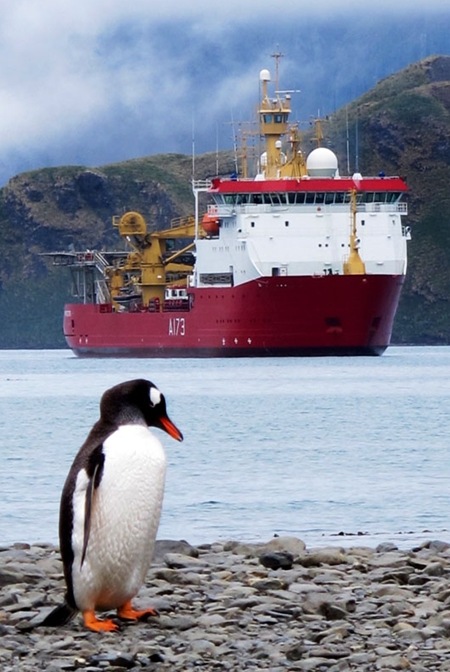
Personnel on board the Royal Navy’s ice patrol vessel HMS Protector have taken part in a number of tasks in South Georgia following a request from the Territory’s government. Image by LA (Phot) Vicki Benwell |
At the same time the Survey Motor Boat (SMB) James Caird IV was launched in Husvik Harbour to survey the seabed for an understanding of the depths and dangers of the waters.
The boat uses a state-of-the-art MultiBeam sonar system - a single beam and towed side scan sonar.
It has the ability to get very close to the shore and is capable of ten knots but it usually surveys at around three or four knots. Once the data is gathered it is then processed on board HMS Protector.
The rocky landscape also provided the perfect environment for the Royal Marine cold weather experts on board to do some mountaineering training among the peaks around Grytviken.
The following day ten members of the ship’s company tackled an extended version of the Shackleton walk - an eight kilometre route that stretched from Husvik to Fortuna Bay with the final leg descending down Shackleton Valley to Stromness.
This followed the original route of Sir Ernest Shackleton.
|
|
Other members of the ship’s company went to Shackleton Valley to practice their cold weather survival skills as well as basic field craft techniques.
The final task involved transferring one Government Official, one Norwegian Nature Expert and two members of the South Georgian Heritage Trust to the Falkland Islands whilst en-route dropping off a member of the British Antarctic Survey Team at Bird Island.
HMS Protector left Portsmouth in October 2013 and is to stay in the Antarctic region until 2015 conducting surveys and patrols on behalf of the UKHO and FCO and providing logistical support to the British Antarctic Survey organisation.
She also provides a sovereign presence in the British Antarctic Territory and delivers the UK’s commitments under the Antarctic Treaty, supports science programmes and ensures expeditions and vessels are meeting their international environmental obligations.
Royal Navy press release