|
April 06 2015 Modernization plan expected to create more jobs and increase regional economic impact The Port of San Diego has added a second community meeting to offer the public the opportunity to provide input on the potential environmental effects of a proposed modernization plan for the Tenth Avenue Marine Terminal (TAMT), located off Harbor Drive and Cesar Chavez Parkway. The second scoping meeting for the project's Environmental Impact Report (EIR) will be held on Wednesday, April 8, 2015, at 5:30 p.m. at the Ryan Bros. Coffee, located at 1894 Main Street, San Diego, CA 92113 [map] in the Barrio Logan neighborhood. Simultaneous English to Spanish interpretation services will be available and members of the community are encouraged to attend. The first community meeting was held March 18, 2015. "The second meeting was added to ensure our closest neighbors have ample opportunity to participate in this public process, and can voice ideas about how the maritime industry can work hand in hand with our community as we create jobs and economic impact for the San Diego region," said the Port of San Diego's Maritime Director Joel Valenzuela. The Port of San Diego issued a Notice of Preparation (NOP) for a Draft EIR to fully study the proposal last month. The proposed plan will create three areas within the terminal's existing footprint, to bring additional cargo through the terminal within its current specialties of break-bulk cargo such as military and energy parts, refrigerated containers for fresh produce, and clean bulk cargo used in construction. The proposal includes removal of obsolete infrastructure and upgrades to facilities in order to handle more cargo in an efficient and environmentally responsible way. Issuing the NOP gives agencies, the public and other interested parties an opportunity to comment on possible environmental impacts of the project. Comments will be accepted until 5 p.m. on Tuesday, April 14, 2015. Comments should be mailed to the San Diego Unified Port District, Environmental & Land Use Management Department, 3165 Pacific Highway, San Diego, CA 92101, or emailed to lhofreiter@portofsandiego.org. The Port of San Diego has leveraged its natural advantages to become a leading, West Coast specialty port. Comprising two terminals – Tenth Avenue Marine Terminal (TAMT) and National City Marine Terminal (NCMT) – it is a natural, deep-water, protected harbor that is uncongested and, due to the temperate climate, ideal for handling all types of cargo year-round. Due to its strategic location, the Port of San Diego services goods movement to and from Mexico, Central and South America, Asia, Australia, Canada and Europe. It is also one of 17 commercial ports designated as a strategic port by the U.S. Department of Defense, which is vital as San Diego hosts the largest military concentration in the world. Located on 96 acres in the City of San Diego, Tenth Avenue Marine Terminal has eight berths and is home to one of only two on-dock cold storage facilities on the West Coast. This refrigerated space handles 185 million Dole bananas each month; every Dole banana sold west of the Rocky Mountains, from Mexico to Canada enters at TAMT. The Maritime Trade industry generates $3.9 billion in economic impact for the San Diego region, supporting over 23,000 jobs. Video by Port of San Diego 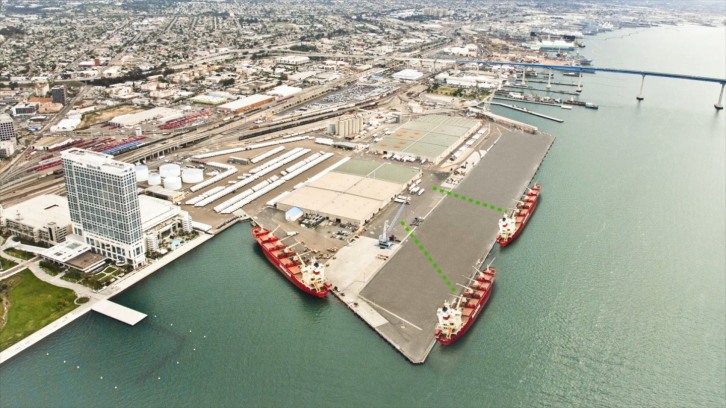
Second Community Meeting Added on Environmental Impact Report for Tenth Avenue Marine Terminal Proposal. “The second meeting was added to ensure our closest neighbors have ample opportunity to participate in this public process, and can voice ideas about how the maritime industry can work hand in hand with our community as we create jobs and economic impact for the San Diego region,” said the Port of San Diego’s Maritime Director Joel Valenzuela. About the Port: The Port of San Diego is a unified district encompassing five member cities surrounding San Diego Bay. A public agency, the Port is charged by the State of California with developing the tidelands and commercial business as steward of the public-trust tidelands along 34 miles of San Diego Bay. We share the waterfront with the Navy, which oversees 17 miles of San Diego Bay. We operate under the Public Trust Doctrine, which specifies that these waterways and waterfronts are primarily reserved for water-dependent uses such as fishing, cargo activity, bay tours and recreational access such as hotels and restaurants; as well as environmental and natural-habitat preservation. We have guided the development of this prime waterfront property with a carefully selected portfolio of world-class commercial real estate, maritime and public uses. Our 16 hotels, 25 marinas, numerous restaurants, tours and museum attractions operate side-by-side with a working waterfront of boatyards, sportfishing landings and marine cargo terminals. We also maintain 20 public parks as amenities that attract visitors and enhance the value of our waterfront. Port of San Diego press release |