 Shell completes its largest petrochemicals project
04 May, 2010
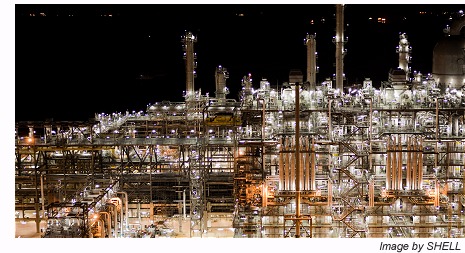
The Shell Eastern Petrochemicals Complex (SEPC) project in Singapore has
created Shell’s largest, fully-integrated refinery and petrochemicals hub.
Shell today announced the successful completion of the Shell Eastern Petrochemicals Complex (SEPC) project in Singapore. SEPC is Shell’s largest petrochemicals investment to date and the second world-scale petrochemicals project the company has completed in Asia in four years. The completion of the project reinforces Shell’s intention to remain a leading player in the expanding Asian petrochemicals market.
 “This project clearly demonstrates Shell’s strategy to focus on growth markets and to integrate oil and chemicals manufacturing to gain efficiencies,” said CEO Peter Voser. “Creating Shell’s largest integrated site will bring considerable synergies in terms of feedstocks, operations and logistics. Our ambition is to grow in the dynamic Asian petrochemicals market, where we are already a leading player.
“Through SEPC, we have once again shown we have the expertise and technologies to undertake and deliver world-scale, complex hydrocarbon projects not only on time, but also with an outstanding safety record.”
Shell designed the new facilities to maximise the benefits of locating refining and petrochemicals production within a single manufacturing hub on Bukom and Jurong islands, just off the Singapore coast. Jurong Island is a major petrochemical zone which provides opportunities for further integration with current and potential customers, as well as in Shell’s own operations.
Shell has a deep and long-standing relationship with Singapore that spans almost 120 years. Today it serves as Shell’s Asian hub for petrochemicals.
SEPC project facts:
• The additional capacity brought on stream by the SEPC project includes:
Ethylene: 800,000 tonnes per annum
Mono-ethylene glycol: 750,000 tonnes per annum
Propylene: 450,000 tonnes per annum
Benzene: 230,000 tonnes per annum
Butadiene: 155,000 tonnes per annum
• The world-scale ethylene cracker makes building blocks for the chemical industry, which in turn are turned into many materials in everyday life, from clothing to automotive parts. The cracker can process a range of feedstocks and this flexibility can help to maximise returns as economics shift between hydrocarbon streams.
• In November 2009 the project started up one of the world’s largest and most efficient monoethylene glycol (MEG) plants. Located on Jurong Island and supplied with feedstock from the nearby cracker, the MEG unit is now supplying raw materials for the growing packaging and textiles industries in Asia.
• A new butadiene extraction unit on Bukom Island is due on stream in the coming weeks. Butadiene is primarily used in the manufacture of synthetic rubber products, including tyres. Other applications include adhesives, road surfaces and computer casing.
• Shell has a strong heritage in petrochemical processing technologies which continues with the SEPC project. The new units incorporate a number of technological advances, including Shell’s OMEGA (Only MEG Advantaged) processing technology. The OMEGA process gives the highest commercial yields of MEG from ethylene. Production and operating costs are lower than a traditional MEG plant. Less steam is consumed and less wastewater is produced. More than 15,000 workers from 20 countries were involved in SEPC’s construction phase. The project recorded nearly 38 million man-hours without serious injury, which represents a worldclass safety performance. The achievement demonstrates Shell’s excellence in project execution and the priority Shell and its contractors place on safety.
• SEPC is Shell’s second major petrochemicals project in Asia in four years. In 2006 CNOOC and Shell Petrochemicals Company Limited (CSPCL) started up the 2.3m tonnes per annum ‘Nanhai’ 50/50 joint venture complex in Guangdong province, China.
Shell