|
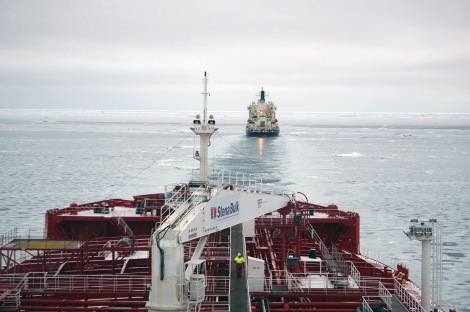
The Stena Polaris left the Gulf of Finland on 17 September and is expected to arrive at the port of Yosu in South Korea on 22 October. Sailing via the North-East Passage offers the expansive Northern Asia opportunities to speed up the freight routes to and from the region. Increased traffic in the Arctic has led to higher safety requirements. IMO is currently in the process of drawing up a Polar Code that will lay down the basic prerequisites and requirements for transportation through the Arctic. Sailing to South Korea via the North-East Passage compared with sailing via the Suez Canal, India and the Strait of Malacca cuts 10-13 days off the voyage. A medium-sized tanker such as the Stena Polaris saves around 400 tons of fuel. This represents savings of SEK 2 million in addition to environmental benefits since the voyage takes fewer days. The Stena Polaris is owned by Concordia Maritime and has been time-chartered by Stena Bulk for this project. Ship's specifications: LOA: 183 m, beam: 40 m, draft: 11.3 m, DWT: 65,000 tonnes. The P-MAX tankers were designed and built by Stena and Concordia Maritime. They have a double hull, optimum corrosion control, two engine rooms with full water and fire integrity and two propulsion systems. Double propellers and rudders and a specially designed bridge layout give the tanker extremely good maneuverability and a 360° view, which facilitate safe navigation in narrow waters. Stena Bulk is one of the world’s leading tanker shipping companies specializing in transportation of crude oil and refined petroleum at sea. The company is engaged in developing, building tankers, as well as in manning and chartering the vessels out. Related article: Follow the Stena Polaris through the North-East Passage Stena Bulk, press release |