|
TMBC Logistics Ltd - Novorossiysk
Ph./Fax: +7(8617)765888/765999
Skype : lubovvoloshina
Web : www.tmbcl.ru
Email: voloshina@tmbcl.ru
Members of TMBC Logistics group of companies www.tmbcl.com
“Liner service for project cargoes from ports of Italy and Turkey to ports of Black Sea”
Tuesday, May 31, 2011
1. Import of project cargos through ports of Azov-Black Sea basin as a separate segment of shipping market.
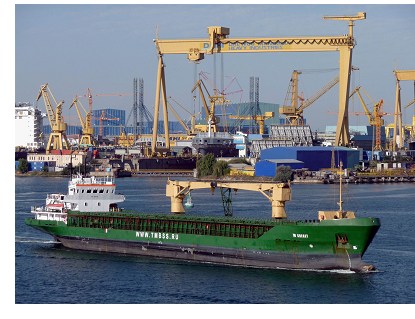 Russia's foreign trade for last 5 years is characterized by the growth of imports share in total national foreign trade operations. At present the volume of imports of machinery and a variety of project cargos for the development of industrial sector of Russian economy has returned to a pre-crisis level making up almost half of the total import of goods into the country. Southern Federal District of Russia enjoys a special investment status in the country and this certainly adds special importance to logistical solutions of import of manufacturing machinery and other project and high and heavy cargoes.
It is not surprising that this question of logistics was not previously discussed in details by shipping and logistics experts - the volume of sales of project cargoes in this geographical area is comparatively small in relation to other types of general and containerized cargos. At the same time the question of being able to count on reliable and regular delivery of project cargos through ports of Black and Azov seas is growing in importance for customers in Russia and overseas.
2. Southern Federal District of Russia and its importance within the country.
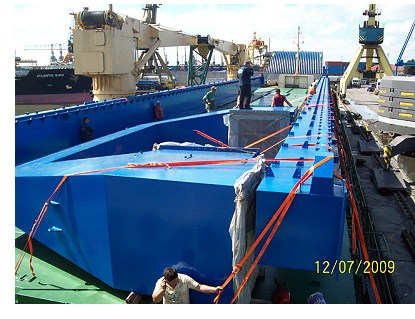 According to the data from Federal Customs Service of Russia the ranked number of goods import structure remains unchanged with leading positions occupied by manufacturing and food products. At the same time the leading regions for import of manufacturing good are Rostov Region ( 50,5 % of all imports) and Krasnodar Region (37,6 %) while leading importers into these two regions remain China, Ukraine, Germany Italy and Turkey. Developments in economic cooperation between the EU and Russia are being supported and promoted by Russian Federal programs of development of Southern Federal District and by active promotion of private investments into this region. Taking into consideration large scale construction plans aimed at fulfilling projects related to Winter Olympics in Sochi in 2014, to Formula 1 Grand Prix in Sochi from 2014 and 2018 FIFA World Cup (Rostov on Don, Krasnodar and Sochi among the participating cities) it is very reasonable to expect a significant growth in imports of various goods and products to these areas all of which are located in the South of Russia.
From logistical point of view connections between China and South of Russia are well established via land routes and also by sea. Ukraine shares a common border and thus minimises any difficulties in delivering goods and products. Import of goods from Germany is traditionally performed by regular RORO and container lines through St Petersburg and by railways and trucks thereafter. At the same time transportation of cargoes that can not be containerised from Turkey and Italy to Russia does not enjoy such reliability and commercial effectiveness in relation to costs involved and majority of project and oversize cargoes fall into the category.
According to the data from Federal Customs Service of Russia the ranked number of goods import structure remains unchanged with leading positions occupied by manufacturing and food products. At the same time the leading regions for import of manufacturing good are Rostov Region ( 50,5 % of all imports) and Krasnodar Region (37,6 %) while leading importers into these two regions remain China, Ukraine, Germany Italy and Turkey. Developments in economic cooperation between the EU and Russia are being supported and promoted by Russian Federal programs of development of Southern Federal District and by active promotion of private investments into this region. Taking into consideration large scale construction plans aimed at fulfilling projects related to Winter Olympics in Sochi in 2014, to Formula 1 Grand Prix in Sochi from 2014 and 2018 FIFA World Cup (Rostov on Don, Krasnodar and Sochi among the participating cities) it is very reasonable to expect a significant growth in imports of various goods and products to these areas all of which are located in the South of Russia.
From logistical point of view connections between China and South of Russia are well established via land routes and also by sea. Ukraine shares a common border and thus minimises any difficulties in delivering goods and products. Import of goods from Germany is traditionally performed by regular RORO and container lines through St Petersburg and by railways and trucks thereafter. At the same time transportation of cargoes that can not be containerised from Turkey and Italy to Russia does not enjoy such reliability and commercial effectiveness in relation to costs involved and majority of project and oversize cargoes fall into the category.
3. Krasnodar Region – volume of foreign trade.
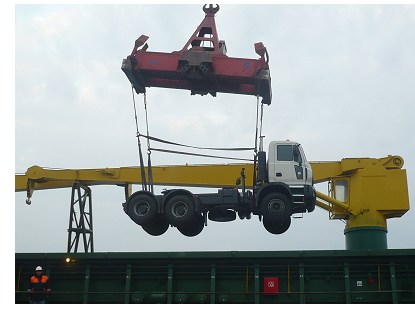 The list of trading countries with which Krasnodar Region enjoys regular trade impresses with its diversity geographically and culturally. Before the crisis in 2007 the foreign trade turnover of Krasnodar Region amounted to 8,533.9 million of US Dollars with 86% of the total volume by cost contributing to non CIS trading partners ( USD 7,346.3 million ) and which an annual growth of more than 50%. In the period of 2006-2008 the main trading partners were the traditional importers namely Turkey ( 21% of trade), Italy (6.7%) and France (4.4%).
The share of export exceeds importing the Russian Federation as well as the CIS countries. However, a steady increase is observed in the import in post-crisis period. The main range of imported goods: machinery and equipment, rolling, tobacco raw materials and foodstuffs. It is important to note that during last two years the role of Egypt, Syria, Germany and Finland in partnership with Krasnodar Region has increased. Even though over the course of the last 10 years Russia traditionally had the positive balance of trade, namely exports by value exceeding imports, this is now starting to change with a steady growth of imports of the following products: cars and machinery, processed steels, consumer goods and food products. It is also worth noting that during the period of the two years grew the importance of Egypt, Syria, Germany and Finland as trading partners of Krasnodar Region.
The list of trading countries with which Krasnodar Region enjoys regular trade impresses with its diversity geographically and culturally. Before the crisis in 2007 the foreign trade turnover of Krasnodar Region amounted to 8,533.9 million of US Dollars with 86% of the total volume by cost contributing to non CIS trading partners ( USD 7,346.3 million ) and which an annual growth of more than 50%. In the period of 2006-2008 the main trading partners were the traditional importers namely Turkey ( 21% of trade), Italy (6.7%) and France (4.4%).
The share of export exceeds importing the Russian Federation as well as the CIS countries. However, a steady increase is observed in the import in post-crisis period. The main range of imported goods: machinery and equipment, rolling, tobacco raw materials and foodstuffs. It is important to note that during last two years the role of Egypt, Syria, Germany and Finland in partnership with Krasnodar Region has increased. Even though over the course of the last 10 years Russia traditionally had the positive balance of trade, namely exports by value exceeding imports, this is now starting to change with a steady growth of imports of the following products: cars and machinery, processed steels, consumer goods and food products. It is also worth noting that during the period of the two years grew the importance of Egypt, Syria, Germany and Finland as trading partners of Krasnodar Region.
3.1. Italy as trading partner.
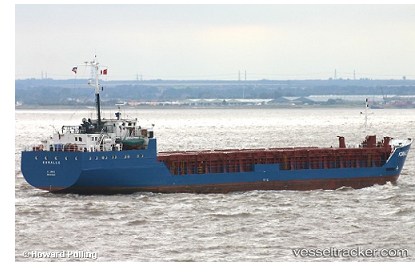 Italy accounted for 5.1% of all imports to Russia and for 6.1% of Russian exports. Among imported goods two thirds of the amount consisted of:
-Passenger cars, goods and transport vehicles and manufacturing equipment ( 51.2%)
-Chemical and pharmaceutical industries goods and products (14,6%)
List of specific goods and items that are imported to Russia from Italy doesn’t undergo big fluctuations and changes which can be partially attributed to its diverse structure. In 2008 the main articles of imports from Italy were pharmaceuticals, furniture, household electrical appliances, footwear, various industrial equipment (steel mills equipment), parts for consumer goods manufacturing plants, vehicles spares, trucks, centrifuges and separators, pumps and compressor equipment, valves and of course Italian wines.
3.2. Turkey as trading partner.
After 2008 foreign trade turnover of Krasnodar region with Turkey continues to grow steadily as the presence of Turkish goods on Krasnodar Region consumers market is continuously increasing. Just in 2010 the share of Turkish import grew by USD 411.4 million and made up 14% of the total import value indicators for the region.
Turkey is represents the trading partner for Krasnodar Region by supplying foodstuffs and raw materials for their production, chemical and light industry goods, machinery, mineral products
(Cement accounts for 6% of minerals imported in to Russia with 92% of imported cement originating from Turkey), ferrous and nonferrous metals. There is also a steady growth in supply
of trucks and public/passenger transport vehicles from Turkey to Russia.
4. Prospects for developments of export-import market of Russian Federation.
 According to the research bureau "RosBusinessConsulting" drafting of the Federal budget for the period 2011-2013 was based on a cautiously optimistic prognosis which envisaged for economic recovery to start in 2010. In 2011 a very significant proportion of financial investments was envisaged to be aimed at energy and fuel production sectors of the economy.
The forecast of economic growth for medium term is projecting annual growth of 3.9-4.5% per annum which is well below the average growth of the period 2000-2007 with its average growth of about 7% per annum. At a same time it is expected that during 2011 there will be a significant growth in domestic demand for goods and services as a direct result of increased investments in the infrastructure development projects.
According to IMF the average price in 2010 for a barrel of oil was USD 79.03 and in accordance with oil futures contracts for 2011 the average price is expected to be USD 107.16 (which is an increase of 35.6%) and for the year 2012 futures traders are closing deals around USD 108 mark. Such positive for oil producing countries forecasts will without a doubt continue to contribute to growth of investments and development of the industrial sector of Russian economy and thus growth in imports of manufacturing equipment and machinery.
5. Growth of import in foreign trade of the Russian Federation.
According to data from Federal Customs Service in 2010 imports to Russia increased by 36.8% compared with the previous year and amounted to 229 billion U.S. $ with imports from CIS countries growing by 44.8% and amounting to U.S.$ 31.6 billion and from other countries by 35.6% and to U.S.$ 197.4 billion respectively.
The increase in value of imports to Russia in 2010 compared with 2009 was mostly contributed by increase in import volumes to 135,5% in comparison with year 2009 while the average of prices only rose of 101.6% in relation to the previous year. Among the goods imported to Russia from non CIS countries machinery and industrial equipment were responsible for 47% of total trade volume in 2010 and for 46.1% in year 2009 while value of goods imported in 2010 increased by 38.4% compared with the previous year.
6. Demand for shipping service for routes from Turkey and Italy to South of Russia.
Substantial share of goods is being traditionally imported by the existing container lines services while products for manufacturing industry – oversize and overweight units and high and heavy vehicles are not being suitable for transportation in containers. Such cargoes are often referred to as “Project” cargoes as their transportation required specialized approach in developing and accessing a project of most optimal way of getting goods from port to port by ships which are not regular line traders and have to be engaged on a “when needed” basis.
It is very challenging to perform an overall assessment of volume of maritime trade between the regions of Northern Adriatic Sea and Azov-Black Sea basin and is not an object of this article but its worthwhile noting that shipment of “project” cargoes is characterized by rather inelastic demand in comparison with other generals cargoes that are being shipped in this geographical area. Usually “project” cargoes shipments are characterized by a small volume of each shipment, presence of lengthy and/or heavy cargo units, specific requirements for loading, lashing and securing of cargo for shipment and all this contributes to a fact that cost of sea freight for “project” cargoes exceeds cost of sea freight for general cargoes by two to three times.
For example:-
-Cost of sea freight for a consignment of 3000 metric tons of steel from Ravenna to a port in Turkish Black Sea is U.S.$ 15-18 per ton of cargo.
-Cost of transporting of 3000 cubic meters of “project” cargo from Ravenna to Novorossiysk is U.S. $ 30-40 per cubic meter.
It is most likely for the balance of supply and demand to achieve most optimal sea freight levels once shipment sizes amount to 2-5,000 metric tons per shipment and which is most common size of shipments in Mediterranean – Black Sea trade and an area which is well supported by the size of locally trading sea going vessels. On the other hand the “project” cargoes are most commonly shipped in small lots of 500-1500 cubic meters per shipments and thus demand consolidation of few shipments into one lot in order to optimize sea freight level. Such process of consolidation is generally not possible for a vessel trading on the open market and not being committed to a specific line of service.
Despite growing number of shipments of machinery and equipment from European countries through ports of Adriatic coast of cargoes with destination Russia such shipments are not consistent and cargos specifications are non-homogeneous. This in turn affects the ability of sea carrier to gain sufficient economic benefit from such trade on it own and thus the shipping route Adriatic – Black Sea has always been considered as a “return” or “back haul” business for ship owners and therefore implying low freight rates. Even taking into account the “back haul” factor a non line operating ship owner in majority of cases will still be unable to offer competitive sea freight without having to resort to consolidating a number of smaller parcels as the costs of additional port calls and ship deviations will economically outweigh any benefits gained in forms of sea freight.
7. Offer of sea freight service from Italy and Turkey to Russian Southern ports
Containerized good shipments is undoubtedly the leader in offering sea freight service even despite absence of a direct container line service between Adriatic and Russian Black Sea ports and rather lengthy 20 days transit time due to an additional transshipment port cargo handling.
At present moment sea freights offered by container lines amount to about U.S.$ 700 per 20 foot dry container (which equate to about U.S.$ 21 / cubic meter or U.S.$ 30 per metric ton) and accurately reflect balanced supply and demand and alternative sea transport options.
During the crisis period, we could observe widespread fragmentation and decrease in size of normal “coastal” shipping lots into smaller sizes due to a drastically reduced ability of smaller traders and shippers to rely on banks for opening letters of credit and also banks reduced ability to facilitate financing of the international trade. This is one of the reasons for the continuous containerization of Mediterranean and Black seas general cargoes trade while at a same time despite growth in “project” cargoes shipments containers are still not able to accommodate the size and weight requirements of such cargos and therefore transport capacities for “project” cargoes remain on rather low level and are still associated with high costs.
The present non liner tonnage that is trading in Mediterranean and Black seas is mostly represented by the so called coastal vessels and mini bulkers fleet with size of less than 10,000 metric tons of cargo carrying capacity and is applied to only when potential shipment size reaches at least 2000 cubic meters in volume as this is the minimal size required to generate sufficient sea freight to cover operating cost of the vessel.
The only regular ferry service connects Adriatic coast with Marmara Sea and is mostly used for shipments of trucks with trailers and represents one of the rather expensive solutions of moving goods from inland Italy with rates reaching U.S.$ 80 per cubic meter of cargo for Milan to Moscow route.
One of the main features of the Adriatic to Black Sea shipping market is absence of a regular “break bulk” line service (a line service that handles general cargoes including containers) which ceased to operate in 2008 after the changes in market and operating conditions of post crisis period. For services from Turkey to Russian Black Sea ports another peculiarity can be noted – such services either operate with destination in Russian Black Sea being Rostov on Don or the point of loading in Turkey is located in port of Samsun which is situated on Turkish Black Sea coast as well.
8. Presentation of service offered by TMBC Logistics Ltd.
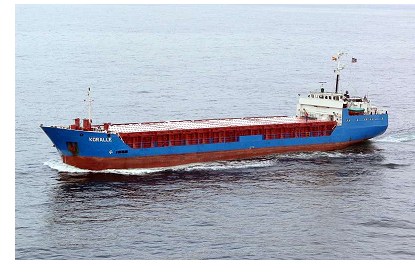
Since January 2011 vessels of line operator TMBC Logistics Ltd operate fortnightly regular voyages between ports of Ravenna and Novorossiysk. The main cargos carried by the line are over size equipment, rolling stock and other heavy lift/high capacity goods vehicles from European manufacturers that are being imported through Black Sea and Azov Sea ports to Russia and other countries in Middle East. The line operators is able to carry out cargo consolidation and so accepts cargoes from shippers without putting a lower limit on size of cargo accepted for shipment.
Adriatic liner service also partially performs the task of servicing hub ports in Turkey and Greece (namely ports of Izmir, Derince and Piraeus) which are linked by ocean/deep sea services with markets in China and North America. These ports are regularly serviced by vessels of all major container, RORO and break bulk line operators and thus represent important logistical junctions on the map of world transport and trade. The continuously growing consumption of Turkish imports in Russian will provide Adriatic and Turkey to Novorossiysk port line operator with a solid and increasing source of freight demand while absence of any liner service between Russian port of Novorossiysk and any Turkish ports in the sea of Marmara will result in line operator facing minimal competition.
Anther important advantage of TMBC Logistic’s liner service is the shallow draft of the vessels engaged in service. Subject to sufficient sea freight inducement line operator can offer shippers calls to shallow drafted ports of Black Sea and especially Sea of Azov (examples are the shallow drafted ports of Rostov and Taganrog).
In the near future the line operators is planning on offering service of allowing shippers to use line’s own containers for shipment of their goods with flexibility of Less that Container Load (LCL) and Full Container Load (FCL) shipment sizes. The line operator is not making its aim to compete with container lines operators and instead aims to complement and enhance the existing spectre of shipping solutions available to shippers but even so the above mentioned FCL and especially LCL direct shipments will allow the operator to become a unique service provider to traders and shippers operating in that geographical area.
9. Conclusion
Intensive economic development of Southern Federal District of Russia and countries in Central Asia consistently force the growth in turnover of EU and Turkey import cargoes through ports of Russian Azov and Black seas. Potential joining by Russia of World Trade Organization will ensure consistency and continuous growth of this trade. In view of absence of direct container service and especially absence of a service that can carry “project” cargoes between ports of Adriatic and Turkey and Azov-Black seas basin TMBC Logistics line service is able to offer an optimal transport solution for traders in shippers engaged in that market area.
Written by: Nadezhda Belaschenko Deputy Director TMBC Logistics Ltd and Alexander Bulygin CITP TMBC Logistics Ltd,
Source: TMBC Logistics Ltd - Novorossiysk
|