|
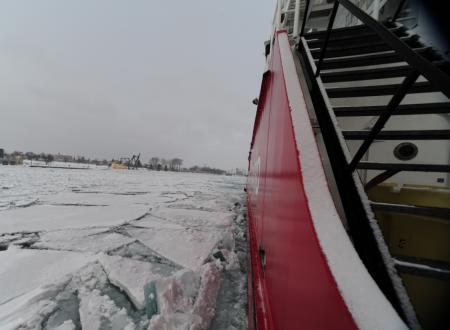
The St. Lawrence Seaway officially opened to shipping Monday, while the Welland Canal, which connects lakes Ontario and Erie, opened Friday. Although the Soo Locks officially opened for the season March 25, no commercial ships have passed through the locks as they are still being escorted across Lake Superior by the Coast Guard Cutters Mackinaw and Katmai Bay. However, the Vessel Traffic Service operated out of Coast Guard Sector Sault Ste. Marie, Mich., has issued a directive to close the upper St. Marys River to navigation because of heavy ice coverage. Of the 10 U.S. Coast Guard cutters in the Great Lakes, nine are icebreakers whose crews have worked alongside four Canadian Coast Guard ships to work long hours clearing the way for lakers and sea-going ships. "The U.S. and Canadian Coast Guard ice-breaking crews have been working extremely hard this entire winter season to keep commerce moving, and they will continue to do so as the warmer seasons arrive and ice no longer impedes navigation," said Cmdr. Matt ten Berge, Coast Guard 9th District aids-to-navigation and domestic ice supervisor. "The Great Lakes have reached near-record ice coverage this winter season, and it has caused a major slow down for commercial shippers and brought long rigorous hours for our ice-breaking cutter crews. We expect to be ice breaking well into the month of May." The U.S. Coast Guard has spent 8,300 hours on the ice-breaking mission this winter. U.S. Coast Guard press release |
 Coast Guard continues to break ice as St. Lawrence Seaway opens, shipping season ramps up