|
 China's economy expanded by $2 trillion in the last decade as growth averaged about 11 percent, he said. In the next decade, he predicted, it will expand by $4 trillion, even if growth slows by more than a third.
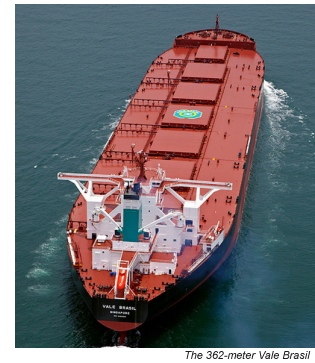
The huge gains of the past decade, Martins added, mean thateven a slower pace of growth translates into huge demand. "Even if they grow at 7 percent, taking into account the size of thegross domestic production today, this growth in the next five to 10 years will be much bigger than before," he said. Vale is the world's largest iron-ore producer and supplies more than a quarter of the world's approximately 1 billiontonnes a year of sea-borne iron-ore exports. To supply better the raw materials necessary for China'sgrowth, Vale has bet on the new class of larger, more-efficientships, which use less fuel per tonne carried. Bigger than three soccer or American football fields, theValemaxes are some of the largest ships afloat. They can carryenough iron ore to make steel for 3-1/2 Golden Gate bridges. But China's government has been reluctant to grant the shipsaccess to the country's ports. Vale has said it needs the ships to compete with Australianore producers such as BHP Billiton and Rio Tinto, which are closer to China and pay about half thetransport fees to move their product to the world's largest oremarket as Brazilian producers do. "The big vessels are here to stay, this is a technical thingand we are just waiting for the ports to be adapted to receiveour ships," Martins said. "It's going to happen soon." The first of the as much as 400,000-deadweight-tonne Valemaxes began operating late last year. Vale hopes to build 35 by the end of 2013, at a cost of about $4.2 billion. While Vale operates several of the vessels itself, most areoperated by third parties under long-term transport contracts.The company is in talks to sell even those ships it operates. "We are in the mining business, not the shipping business,"Martins said. So far, only one Valemax has been granted permission tounload at a Chinese port. Since the December visit of the Berge Everest to the port of Dalian, all ships of more than 300,000 deadweight tonnes have been banned from Chinese ports. Even with slower annual growth, Martins said, economic expansion is penetrating into the western reaches of China and the government is committed to the steel-intensive business of building new housing. He expects China to build 8 million new "social" housing units in 2012, about the same as in 2011. Over the next severalyears, China will need to build 70 million housing units. "A slowdown in China doesn't necessarily mean a recession,"Martins said, adding that the steel business has been growing atrates faster than the overall economy. Iron ore prices are likely to remain above $120 a tonne inthe next several years, he said, because demand remains strongand at prices below that, Chinese producers of low-quality orebegin to lose money. "Any time it falls to $120 a tonne or below, it bouncesback," he said. "The $100 to $120 a tonne level is a level wheremany marginal producers start having difficulty." Ore with 62 percent iron content rose for asixth day in seven on Wednesday, gaining 0.4 percent to $147.70 a tonne, its highest in more than five months. A similar level for nickel, for which Vale expects to becomethe world's largest producer this year, is $16,000 a metrictonne. Below that, Chinese nickel-pig-iron producers beginlosing money, he said. Nickel for delivery in three months fell for a fifthday in six on Wednesday, slipping 1.2 percent to $17,575 a tonnein London. "We are confident we will not see prices (fall) to levels wesaw 10 years ago," Martins said. Vale press release |
 Vale says giant ore ships to win China OK in months