|
25-Year Iron Ore Transport Contract Signed with Vale October 02, 2026
As part of Vale's Shipping decarbonization strategy, the project will employ the world's first 210,000-metric-ton ore carriers equipped with a tri-fuel propulsion system that can run on ethanol, methanol, and conventional heavy fuel oil. The vessels are scheduled for delivery in 2030 and will primarily carry out the transoceanic transport of the company's iron ore. The vessels are not only equipped with tri-fuel engines but also feature an LNG/ammonia-ready design, enabling the future use of either fuel. In addition, they incorporate a range of energy-saving technologies available for next-generation newbuilding vessels. By providing flexibility in fuel selection according to fuel availability, decarbonization benefits, and economic considerations, the vessels broaden practical options for reducing greenhouse gas (GHG) emissions in marine transport. Ethanol could potentially reduce carbon emissions by up to approximately 90% compared with heavy fuel oil on a full lifecycle basis, from fuel production through consumption (Note 1). In recent years, it has attracted growing attention as a renewable fuel, and its ease of handling is expected to streamline wider adoption in marine fuel applications. Overview of the Vessels 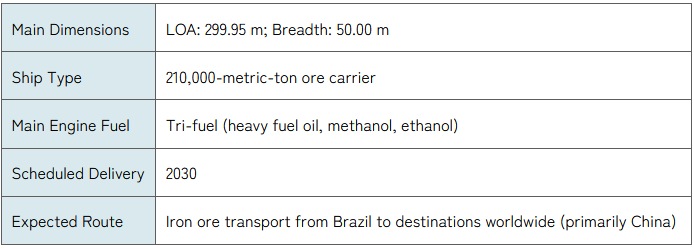
Furthermore, beyond vessel operations, the MOL Group will work toward the decarbonization of the shipping industry and the realization of sustainable resource transport through collaboration with customers and partners across the entire fuel supply chain for ethanol and methanol, from procurement and supply to bunkering. 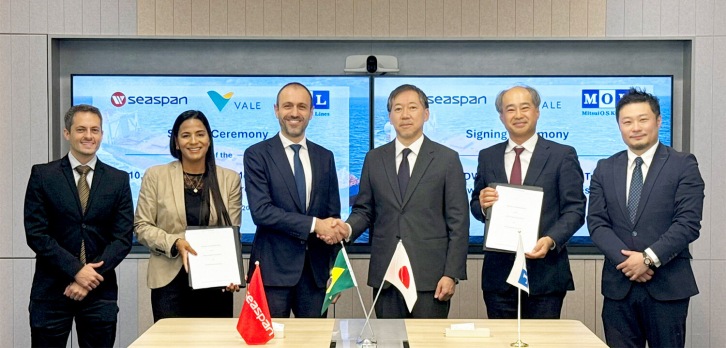
The signing ceremony. Image by MOL. 
Project members. Image by MOL. (Note 1) Based on information provided by Vale. (Note 2) Scope 3 emissions refer to indirect greenhouse gas (GHG) emissions generated across a company's value chain. In this case, emissions associated with the marine transport of iron ore are included in Scope 3 emissions. Mitsui O.S.K. Lines, Ltd. press release 
|
